

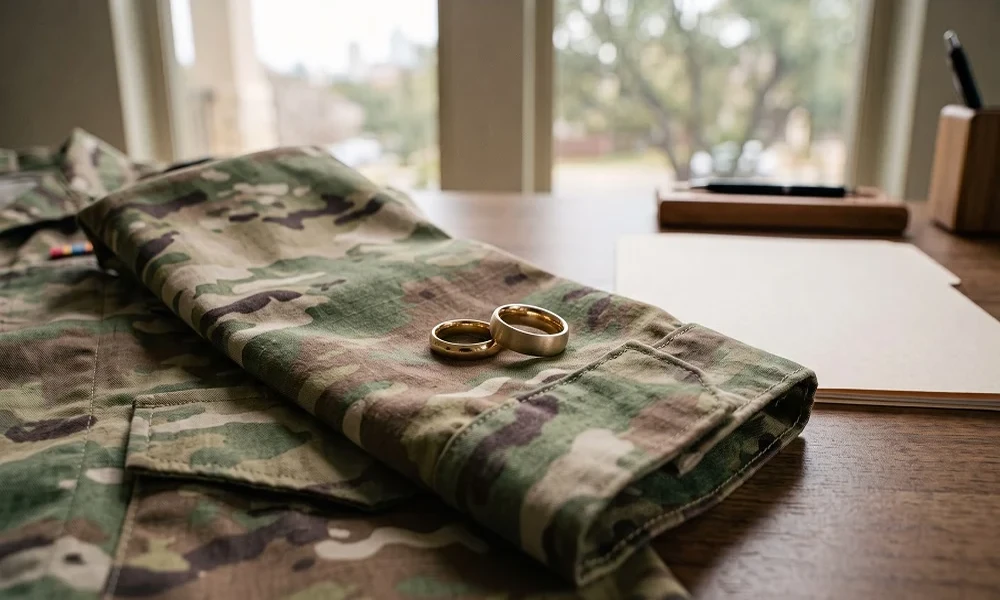
San Antonio has earned its nickname of Military City USA. Joint Base San Antonio ties together Fort Sam Houston, Lackland and Randolph, and service families live in every corner of Bexar County, from Live Oak to Helotes. When one of those marriages ends, the couple deals with Texas family law like any other household. They also face federal rules that civilian couples never see.
Family lawyers working close to the bases, including the San Pedro Avenue office of THE LAW FIRM OF CYRUS F REA II, PC, tend to hear the same questions from service members and military spouses. Where can we file if we were stationed somewhere else last year? What happens to the case during a deployment? Who gets a share of the pension? These questions come up so often because the answers depend on which rulebook applies, state or federal.
Most of the confusion fades once you see how the two systems fit together. Below is a practical walk through the points where military divorce differs from an ordinary Texas case.
Filing Starts With a Residency Question
Texas normally requires one spouse to have lived in the state for six months and in the filing county for 90 days. Military life rarely fits that pattern, so the Texas Family Code makes room for it. Under Chapter 6 of the Texas Family Code, a service member stationed at a Texas installation for at least six months can be treated as a resident. A Texan serving elsewhere usually keeps Texas residency for filing purposes too.
Choosing the state matters more than many couples realize. A court can divide military retired pay only if it has proper authority over the service member. That generally means the member lives there for reasons other than military orders, is domiciled there, or consents to the court’s authority. Filing in the wrong place can leave the pension untouched, which may force a second round of litigation later.
Deployment Changes the Pace, Not the Destination
A divorce does not stop simply because one spouse is overseas. However, the federal Servicemembers Civil Relief Act gives active duty members real protection. A member whose duties affect their ability to appear can ask the court for a stay of at least 90 days, and judges may grant more time. The law also guards against default judgments entered while a member cannot respond. The Department of Justice keeps a plain language overview of these rights on its SCRA resource page.
These protections exist to keep things fair, not to delay a case forever. Many military couples use mediation, video appearances and signed waivers to keep their case moving. Texas still applies its standard 60 day waiting period after filing, regardless of anyone’s duty status.
The Pension Is Usually the Largest Asset
Texas treats retirement earned during the marriage as community property. Military retired pay is no exception, and the federal Uniformed Services Former Spouses’ Protection Act allows state courts to divide it.
A common myth surrounds the so called 10/10 rule. Many people believe a spouse must be married for ten years during ten years of service to receive any share. In reality, that rule only controls whether the Defense Finance and Accounting Service will pay the former spouse directly. A Texas court can still award a share after a shorter marriage. The payments then simply come from the member instead of the government.
Another change catches families off guard. For divorces finalized after December 23, 2016, the former spouse’s share is calculated using the member’s rank and years of service at the time of divorce. Promotions earned after the decree do not increase it. That frozen benefit rule makes the timing of a divorce a real financial factor.
Other assets need equal attention. Thrift Savings Plan accounts are divided through a specific court order. Survivor Benefit Plan coverage must be addressed quickly, since a former spouse generally has one year to make a deemed election. VA disability compensation, on the other hand, cannot be divided as property, a point the Supreme Court confirmed in Howell v. Howell.
Gathering records early can save weeks of back and forth. Useful documents include:
- Recent Leave and Earnings Statements showing base pay, BAH and BAS
- Retirement points statements for Guard and Reserve members
- Thrift Savings Plan statements and beneficiary records
- Survivor Benefit Plan election paperwork
- Current and upcoming PCS or deployment orders
Children Need Plans That Travel
Custody orders for military families have to survive moves and deployments. Texas addresses this directly. When a parent with possession rights deploys, the court can allow a designated person, such as a stepparent or grandparent, to exercise that parent’s time with the child. The original order generally returns once the deployment ends, so the service member does not have to start over.
Distance Changes the Schedule
A PCS move across the country or overseas makes weekly visits impossible. Texas possession orders often include separate long distance schedules with extended summer time and holiday rotations. Parents who build these terms into the original decree avoid a modification fight after every set of orders.
Support Counts More Than Base Pay
Texas child support guidelines are based on net resources. For military parents, that includes housing and food allowances, not just base pay. Members who forget about BAH when estimating support are often surprised by the final figure. Each branch also has its own rules on interim family support during separation, which can apply before any court order exists.
Benefits That Can Outlast the Marriage
Health coverage is one of the most emotional parts of a military divorce. Under the 20/20/20 rule, a former spouse married for at least 20 years, to a member with at least 20 years of service, with at least 20 years of overlap, can keep TRICARE and base privileges. When the overlap is 15 to 19 years, coverage generally lasts one year. Remarriage ends these benefits, so former spouses should plan with that in mind.
Military ID cards, commissary access and dependent housing all change after the decree. Spouses who have lived on or near base for years often need a clear plan for housing, health insurance and income before the final hearing.
Seeing the Whole Picture Early
Military divorce is not harder than a civilian divorce in every way, but it involves more moving parts. Residency rules, deployment protections, the pension formula and custody planning all interact. A decision made in one area can quietly reshape another. Couples who understand both the Texas rules and the federal layer before they file tend to negotiate better agreements and avoid costly corrections later. For a city built around its bases, that knowledge is more than legal background. It is a practical part of protecting a family’s future after military life and married life part ways.